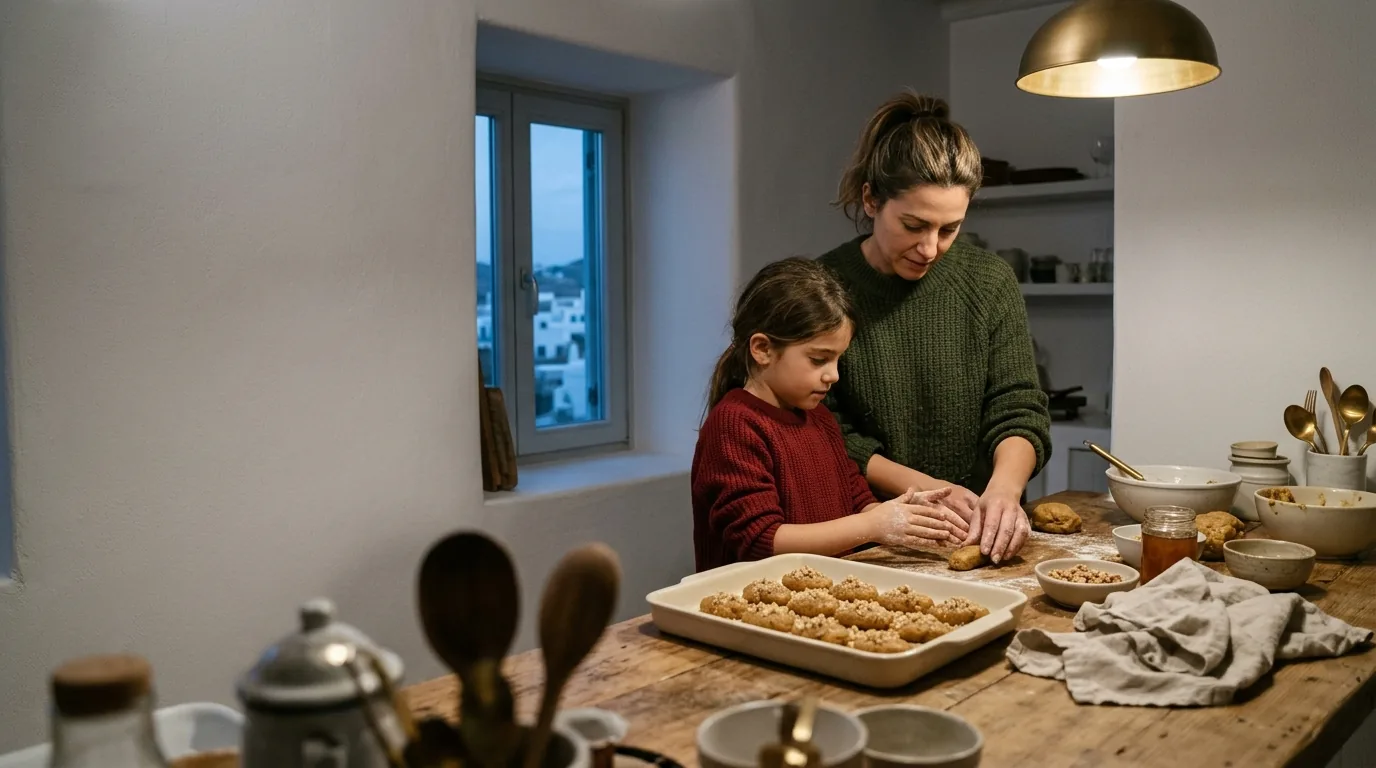
A Greek mother and daughter shaping honey-drenched melomakarona cookies sprinkled with crushed walnuts in a bright island kitchen

Northern winter

Greece

Illuminated wooden boats, triangle-accompanied carols, and the Epiphany blessing of the waters.

Traditional greeting

Καλά Χριστούγεννα

Greek — kah-LAH krees-TOO-yeh-nah

Main celebration dates

December 6 – January 6

Region

Southern Europe

Cultural overview

In Greece, the festive season blends Eastern Orthodox observance with seafaring heritage from Saint Nicholas’s Day on December 6 through Epiphany on January 6. Alongside modern Christmas trees, coastal towns and public squares illuminate traditional model boats (karavakia), children sing door-to-door kalanda carols, families cut the New Year’s vasilopita for Saint Basil, and Epiphany concludes with priests blessing the sea.

Key traditions

December 6 – January 6

Karavaki (The Decorated Boat)

Before Christmas trees became widespread in the 19th century, Greek households—especially on islands and along the coast—decorated small wooden boats (karavakia) with lights to honor Saint Nicholas, patron of sailors, and celebrate safe voyages home.
December 24, December 31 & January 5

Kalanda (Holiday Carols)

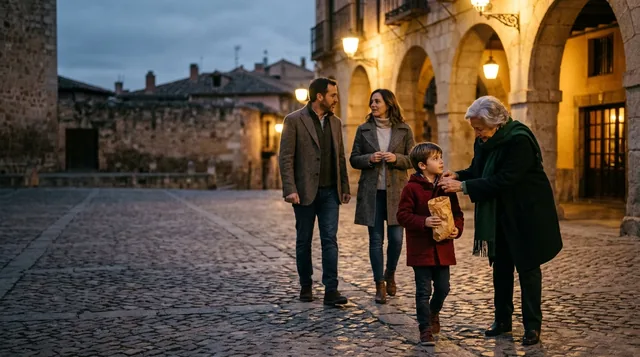
On the mornings of Christmas Eve, New Year’s Eve, and Epiphany Eve, children walk from door to door playing small metal triangles (trigona) and asking, “Na ta poume?” (“Shall we sing them?”). Hosts reward their songs of good fortune with coins and sweets.

January 1

Saint Basil’s Day and Vasilopita

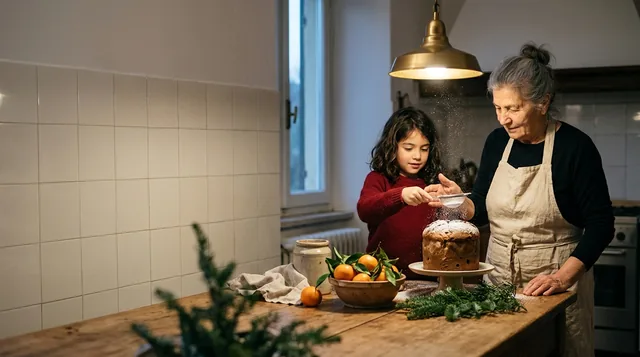
In Greek tradition, gift-giving is centered on New Year’s Day, the feast of Saint Basil the Great (Agios Vasilis). Families gather to cut the vasilopita, a sweet cake or bread containing a hidden coin (flouri) that brings good luck for the year to whoever finds it.

January 6

Theofania (Blessing of the Waters)

Epiphany commemorates the baptism of Jesus. At harbors, lakes, and rivers across Greece, priests throw a wooden cross into the cold water while local swimmers dive in to retrieve it for a blessing of health and good fortune.

Festive table & foods

Vasilopita

A sweet New Year’s cake or bread baked with a hidden coin (flouri) inside; slices are cut in ceremonial order, and the finder of the coin is wished prosperity for the year.

Melomakarona and Kourabiedes

Two signature holiday cookies: spiced, honey-drenched melomakarona topped with walnuts, and crisp butter-and-almond kourabiedes dusted with powdered sugar.

Verified sources

  1. Christmas in Greece: A Feast for the Senses — Visit Greece (Greek National Tourism Organisation) · Primary / Institutional
  2. Christmas Traditions in Greece — Greek News Agenda · Primary / Institutional
  3. The Greek New Year's Tradition of the Vasilopita — Greek News Agenda · Primary / Institutional
  4. Christmas — Encyclopaedia Britannica · Reference

More in this region

See all regions
Southern Europe Northern winter

Italy

Buon Natale

From artisanal nativity scenes on December 8 to La Befana’s broomstick on Epiphany.

Read guide
Southern Europe Northern winter

Spain

Feliz Navidad

A two-week season stretching from the El Gordo lottery to the Three Kings’ parades.

Read guide