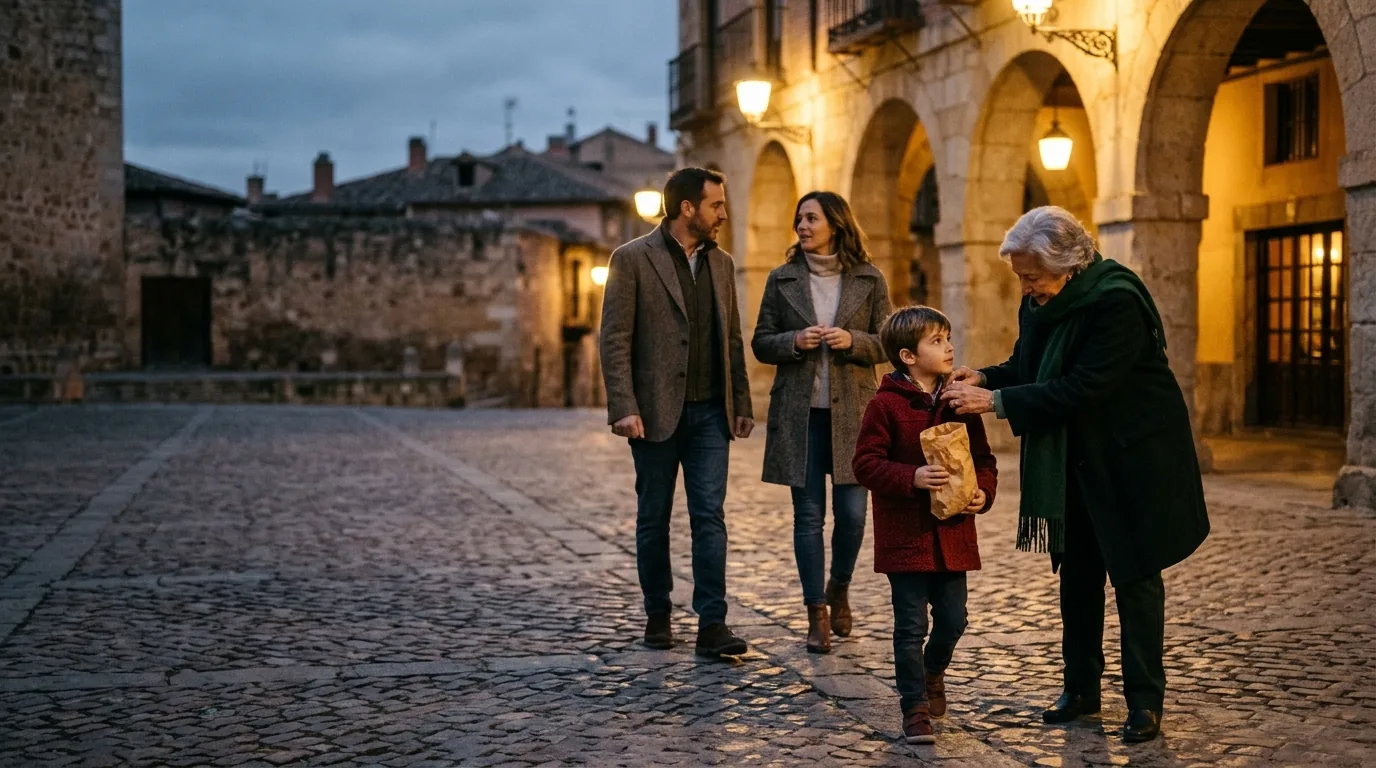
A Spanish grandmother and young boy walking past stone plaza arches at dusk with a paper bag of roasted chestnuts

Northern winter

Spain

A two-week season stretching from the El Gordo lottery to the Three Kings’ parades.

Traditional greeting

Feliz Navidad

Spanish — feh-LEES nah-vee-DAHD

Main celebration dates

December 22 – January 6

Region

Southern Europe

Cultural overview

In Spain, Christmas (Navidad) unfolds over an extended festive calendar from December 22 through Epiphany on January 6. Families gather late on Nochebuena (December 24) for a shared meal and Misa del Gallo (Midnight Mass), while children traditionally await gifts on January 6 from Los Reyes Magos (the Three Wise Men) alongside regional folk figures in December.

Key traditions

December 22

El Gordo (Christmas Lottery)

Dating back to 1812, the Sorteo Extraordinario de Navidad—widely known as El Gordo (“The Fat One”)—marks the public start of the season. Broadcast live from Madrid’s Teatro Real, pupils from the San Ildefonso school chant the winning numbers and prizes while families and coworkers share fractional tickets called décimos.
December 24

Nochebuena and Misa del Gallo

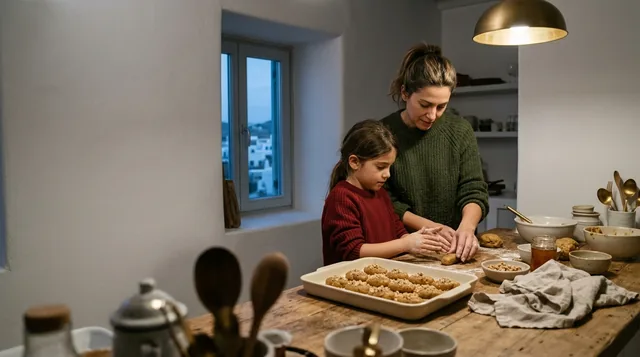
Christmas Eve is centered on a late family dinner, often beginning around 10:00 PM with seafood, jamón, and roast lamb or suckling pig, followed by turrón and marzipan. Many households attend Misa del Gallo (Midnight Mass) afterward.

December 24 – December 31

Regional Gift-Bearers: Tió de Nadal, Olentzero, and O Apalpador

In Catalonia and Aragon, children care for a painted wooden log wearing a red barretina cap—the Tió de Nadal—and tap it with sticks while singing so it “drops” sweets and small gifts. In the Basque Country and Navarre, the pipe-smoking charcoal-burner Olentzero brings gifts on Christmas Eve, while in Galicia’s mountain folklore O Apalpador visits on December 24 or 31 to check that children are well-fed and leave roasted chestnuts.

January 5 – January 6

Cabalgata and Día de los Reyes Magos

On the evening of January 5, towns across Spain host illuminated Cabalgata de Reyes parades where Melchior, Gaspar, and Balthazar toss sweets from floats. Children leave their shoes out overnight—often with water or straw for the camels—to receive gifts on January 6.

Festive table & foods

Turrón and Polvorones

Almond-and-honey nougat (turrón) in hard Alicante or soft Jijona styles, served alongside crumbly almond shortbread (polvorones) and marzipan (mazapán).

Roscón de Reyes

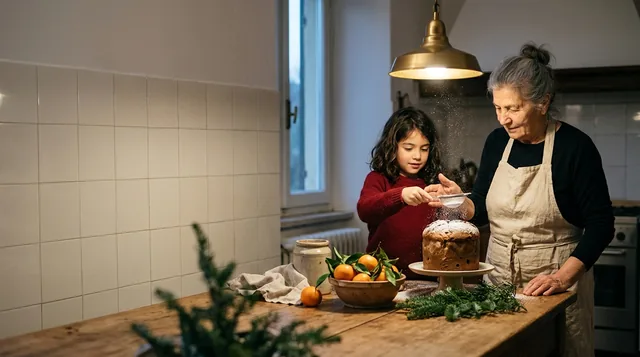
A ring-shaped sweet bread topped with candied fruit and eaten on Epiphany (January 6). Hidden inside are a small figurine and a dry fava bean; finding the bean traditionally means paying for the cake.

Verified sources

  1. Christmas traditions in Spain — Turespaña (Spain.info) · Primary / Institutional
  2. Christmas — Encyclopaedia Britannica · Reference
  3. El Apalpador reclama su espacio en Navidad — Turismo de Galicia · Primary / Institutional

More in this region

See all regions
Southern Europe Northern winter

Greece

Καλά Χριστούγεννα

Illuminated wooden boats, triangle-accompanied carols, and the Epiphany blessing of the waters.

Read guide
Southern Europe Northern winter

Italy

Buon Natale

From artisanal nativity scenes on December 8 to La Befana’s broomstick on Epiphany.

Read guide