354 CE
Earliest surviving Roman record of December 25 Nativity observance (Chronograph of 354).
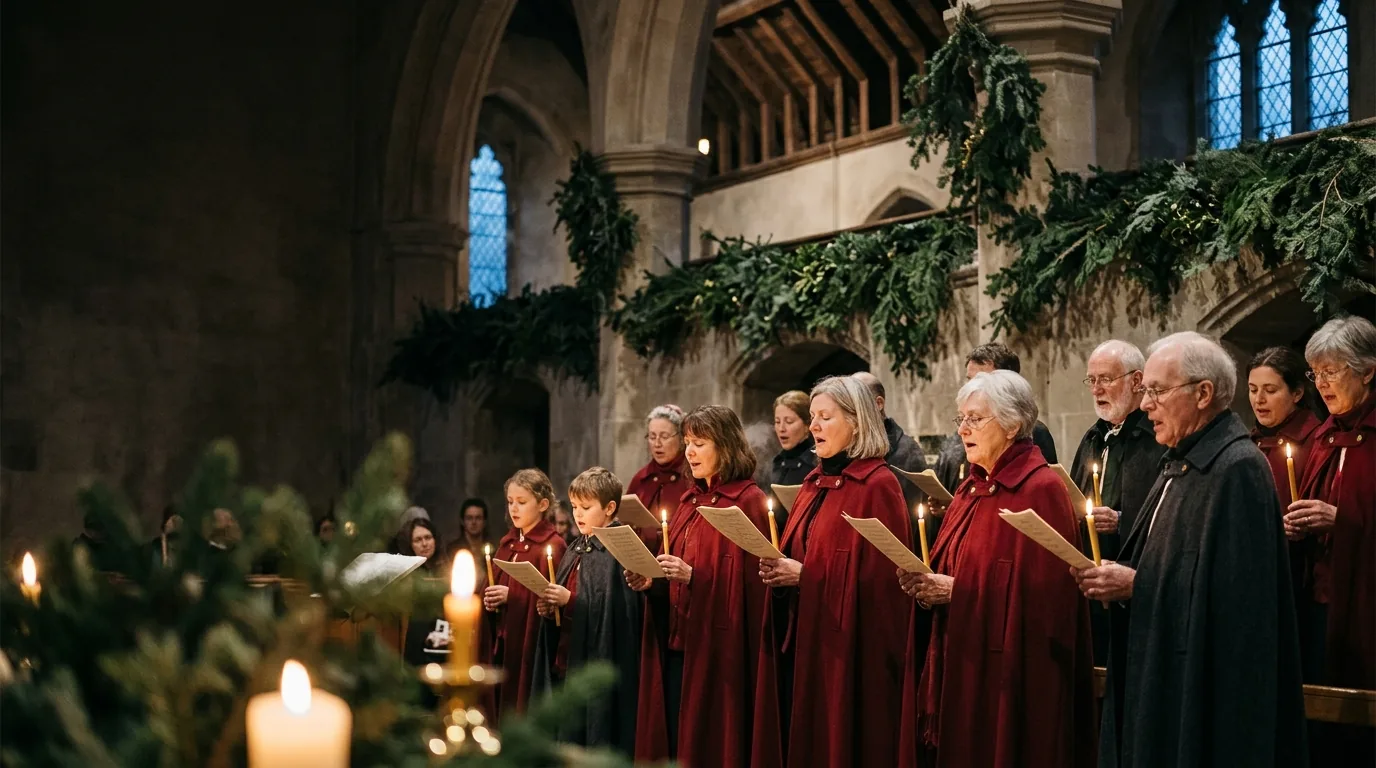
From fourth-century Roman calendars and medieval folk carols to nineteenth-century family customs.
Earliest surviving Roman record of December 25 Nativity observance (Chronograph of 354).
St. Francis of Assisi arranges the living nativity at Greccio, Italy.
Publication of Charles Dickens’s A Christmas Carol and early commercial Christmas cards in London.
Christmas (the Feast of the Nativity) marks the birth of Jesus of Nazareth in Christian tradition. First documented on December 25 in Rome in the Chronograph of 354 CE, the celebration gradually blended liturgical observances, winter solstice customs, regional gift-bearers, and nineteenth-century print culture into the varied traditions observed across continents today.
Early Christian communities did not record a fixed date for the Nativity during the first two centuries. The earliest surviving evidence placing the feast on December 25 appears in the Roman Chronography of 354 CE, while Eastern churches often commemorated both the Nativity and the Baptism on January 6 (Epiphany) before gradually adopting December 25—or, in churches retaining the Julian calendar, January 7.
During the Middle Ages, Christmas developed into a twelve-day public season stretching from Christmas Eve to Epiphany. In 1223, Francis of Assisi staged a living nativity scene at Greccio in central Italy, inspiring crib-making across Catholic Europe and later Latin America. Ring-dances and vernacular carols emerged alongside guild banquets and charitable distributions.
In the nineteenth century, illustrated periodicals, Charles Dickens’s A Christmas Carol (1843), German evergreen trees popularized in Britain and North America, and commercial Christmas cards (begun in London in 1843) reshaped the holiday around domestic gatherings, charity, and children’s gifts. Colonial, missionary, and migrant networks carried these customs to every continent, where local cuisines, music, and climates transformed them.
From Advent and St. Nicholas Day to Nochebuena, Boxing Day, Epiphany, and Candlemas.
How St. Francis of Assisi’s 1223 Greccio gathering inspired centuries of nativity craftsmanship.
Historical origins, traditional names, parades, and January 6 gift-giving customs.