Greccio (1223)
Documented by St. Bonaventure as the first living nativity scene.
How St. Francis of Assisi’s 1223 Greccio gathering inspired centuries of nativity craftsmanship.
Documented by St. Bonaventure as the first living nativity scene.
Pesebre, nacimiento, belén, portal, presepe, crèche, Krippe.
Neapolitan terracotta, Provençal santons, Alpine woodcarving, and Peruvian retablos.
From carved wooden Neapolitan presepi and Provençal santons to Andean retablos and Latin American pesebres, the nativity scene (nacimiento, belén, crèche, or Krippe) is one of Christmas’s oldest visual traditions, traced by medieval chronicles to Greccio, Italy, in 1223.
According to St. Bonaventure’s Legenda Maior (Major Life of St. Francis), in December 1223 Francis of Assisi prepared a manger with hay, an ox, and a donkey in a cave near the hillside town of Greccio in Umbria. Local villagers gathered by torchlight for Mass, turning the Gospel narrative into a tactile, visual scene.
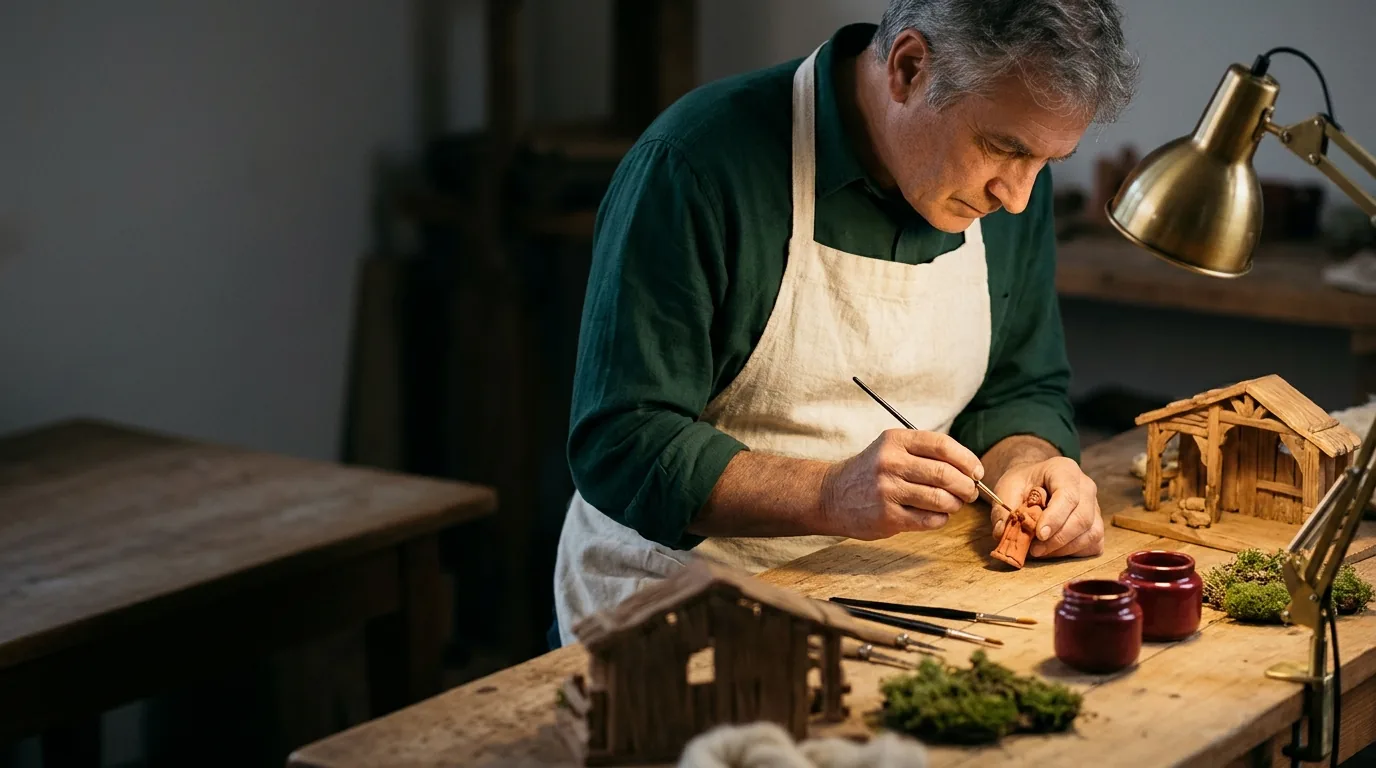
Over subsequent centuries, sculpted cribs flourished in churches and homes. Eighteenth-century Naples became renowned for elaborate presepi featuring hundreds of terracotta figures dressed in period Neapolitan costume. In southern France, artisans still craft clay santons, while Alpine and Czech workshops carve wooden nativities and tiered Christmas pyramids.
Spanish and Portuguese colonists introduced nativity scenes to the Americas, where indigenous and local artisans adapted them using regional materials and landscapes. In Colombia, Venezuela, Costa Rica, Ecuador, and Peru, families build sprawling landscapes with moss, miniature houses, Andean llamas, or tropical plants, placing the Baby Jesus figure in the manger at midnight on December 24.
From fourth-century Roman calendars and medieval folk carols to nineteenth-century family customs.
From Advent and St. Nicholas Day to Nochebuena, Boxing Day, Epiphany, and Candlemas.
Historical origins, traditional names, parades, and January 6 gift-giving customs.