January 6
Feast of the Epiphany (Día de los Reyes Magos), closing the traditional twelve days.
Historical origins, traditional names, parades, and January 6 gift-giving customs.
Feast of the Epiphany (Día de los Reyes Magos), closing the traditional twelve days.
Gold, frankincense, and myrrh, later linked to Melchior, Gaspar, and Balthazar.
Roscón de Reyes, Rosca de Reyes, Galette des Rois, and King Cake.
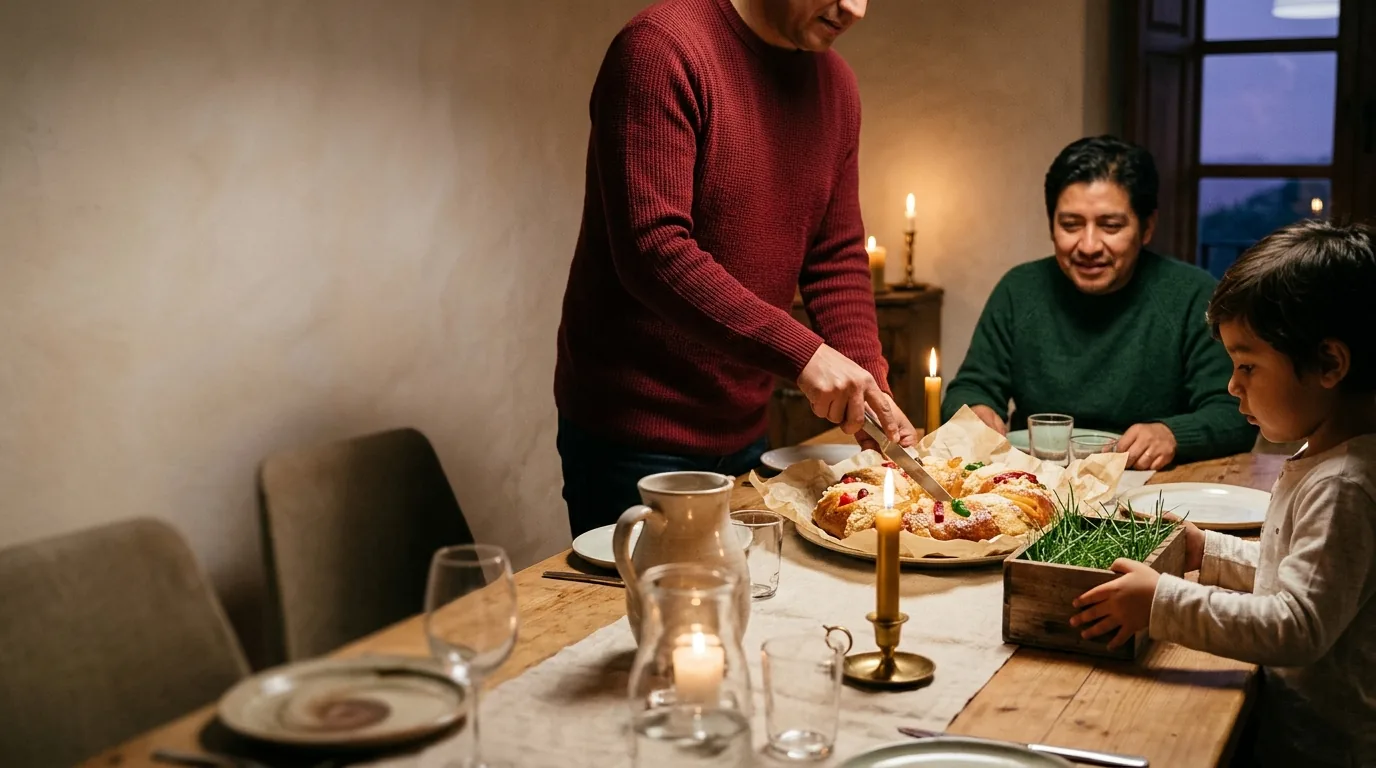
Celebrated on January 6 in Spain, Latin America, Puerto Rico, and much of Europe, Epiphany commemorates the visit of the Magi (Los Reyes Magos) to Bethlehem. Children leave shoes or grass-filled boxes for the travelers and their animals, while communities share ring-shaped cakes and illuminated parades.
The Gospel of Matthew describes magi—learned astronomers or wise men from the East—following a star to bring gifts of gold, frankincense, and myrrh. Matthew’s text does not specify their number or names; by the early Middle Ages, Western Christian tradition fixed their number at three (matching the three gifts) and named them Melchior, Caspar (Gaspar), and Balthazar.
On the evening of January 5, Spanish cities host elaborate Cabalgata de Reyes parades, while in Puerto Rico and parts of the Caribbean children gather grass and water in shoeboxes under their beds for the Magi’s camels or horses. In Andean Peru and Bolivia, communities also celebrate Bajada de Reyes when nativity scenes are taken down.
Sweet circular cakes mark Epiphany across languages: Spain’s Roscón de Reyes, Mexico’s Rosca de Reyes, France’s Galette des Rois, and New Orleans’s King Cake. A small figurine hidden inside names the symbolic king or queen of the gathering (or, in Mexico, obliges the finder to host tamales on February 2, Candlemas).
From fourth-century Roman calendars and medieval folk carols to nineteenth-century family customs.
From Advent and St. Nicholas Day to Nochebuena, Boxing Day, Epiphany, and Candlemas.
How St. Francis of Assisi’s 1223 Greccio gathering inspired centuries of nativity craftsmanship.